Infancy & Toddler Stage: Early Brain Development in Lahore
(3 months – 3 years, Saturdays)
Programs: Baby Brain Awakening + Toddler Brain Development
At birth, a child’s brain is about 25% of adult size; by age 2, it reaches 80% of adult brain volume. This is the most critical period of early brain development for forming neural pathways that lay the foundation for intelligence, emotional health, and lifelong learning. Right Brain Education emphasizes rapid neural development through sensory-rich, playful, and parent-supported experiences. Our Infancy & Toddler Stage in Gulberg, Lahore is for children from 3 months to 3 years. It runs on Saturdays, 10:30 AM–1 PM, with a parent beside the child in every session.
Brain Development:
- ✔ Rapid Neural Growth: Over 1 million new neural connections form every second, supporting memory, attention, and early problem-solving.
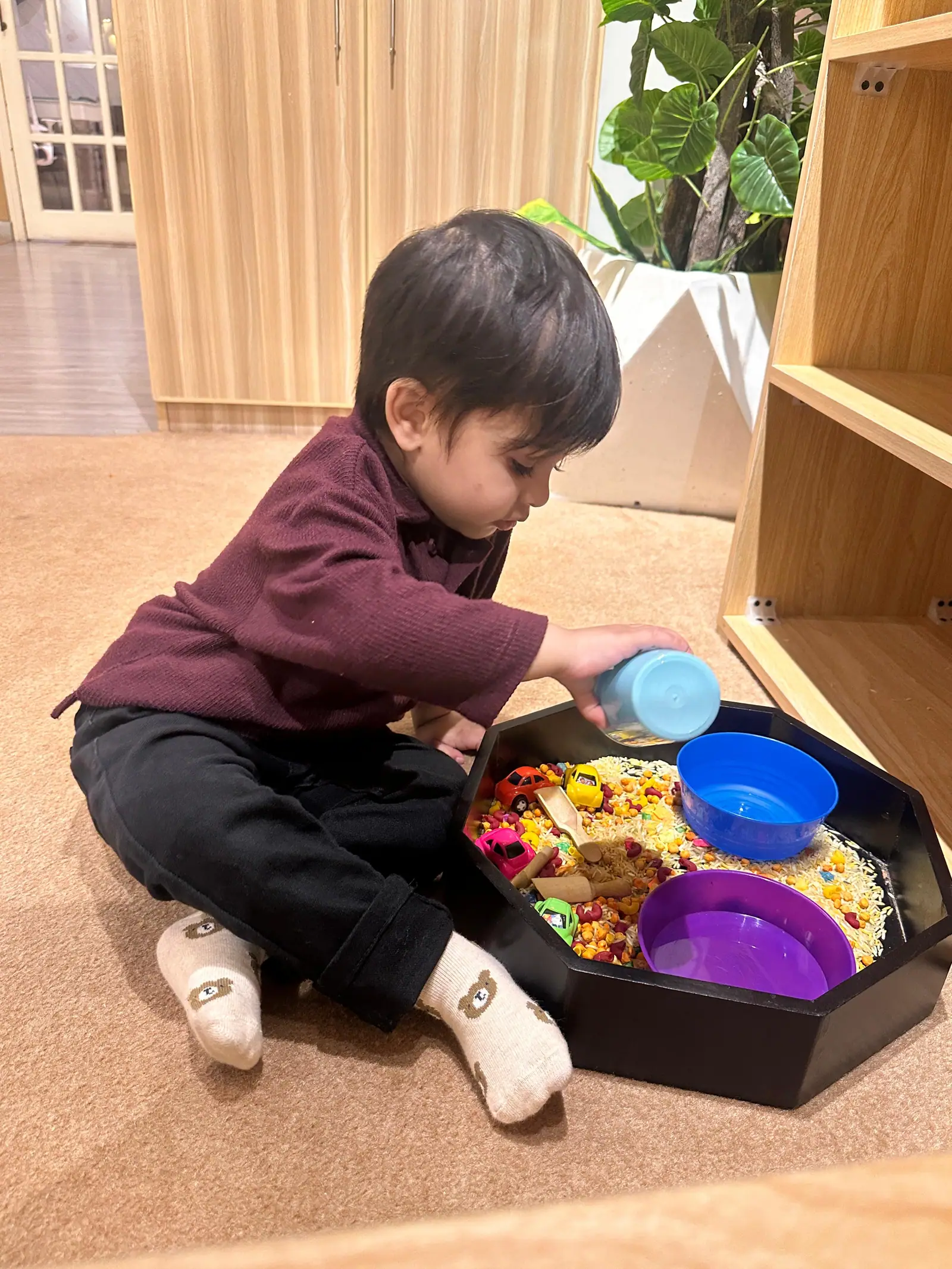
- ✔ Sensory Stimulation: Sight, sound, touch, and movement exercises enhance visual and auditory processing, motor coordination, and cognitive flexibility. Simple sensory activities for toddlers, such as following a moving toy with the eyes or exploring safe textures, are used throughout this stage.
- ✔ Eye Tracking & Visual Skills: Activities using eye tracking and visual focus strengthen attention, concentration, and spatial awareness.
- ✔ Motor & Coordination Skills: Guided movement, grasping, and balance exercises enhance fine and gross motor development, essential for future learning and reading readiness.
- ✔ Emotional & Social Development: Bonding with parents through play and interactive exercises fosters secure attachment, emotional regulation, and social skills. This mother child bonding is why mothers are part of our classroom.
- ✔ Early Language & Communication: Exposure to rhythm, music, and storytelling activates language centers, boosting vocabulary and auditory processing. Our Early Language Bonding class focuses on exactly this.
What happens at each age
- Around 3 to 6 months: babies follow faces and objects with their eyes, respond to voices and start to reach.
- Around 6 to 12 months: babbling, sitting, crawling and exploring everything with hands and mouth.
- Around 12 to 24 months: first words, walking, pointing and copying what adults do.
- Around 2 to 3 years: short sentences, running and climbing, pretend play and wanting to do things alone.
These are typical ranges only. Every baby develops at their own pace. If you have concerns, speak to your pediatrician.
Why it matters for our programs:
Baby Brain Awakening and Toddler Brain Development combine Right Brain Education techniques, sensory-rich activities, and neuroscience-backed exercises. These programs guide your child’s visual, auditory, motor, and emotional development, building strong neural foundations while encouraging curiosity, creativity, and secure parent-child attachment. In practice this is play based learning: short, joyful activities with a clear purpose, repeated often, at the pace your child sets. Parents often ask about a preschool for 1 year old or a preschool for 2 year old in Lahore. At this age the right setting is not a classroom with desks, but a small, calm group where your child explores safely with you nearby.
Benefits
Sensory exploration & motor skill development
Eye tracking, focus & visual processing
Early language acquisition & auditory development
Emotional bonding & secure attachment
Cognitive growth & curiosity stimulation
Confidence, independence & problem-solving
Early preparation for reading, math, and creative thinking
Key Developmental Focus Areas
Attention & Focus Short, engaging visual and auditory exercises improve early concentration and sustained attention.
Imagination & Creativity Storytelling, music, and sensory play activate right-brain creativity and neural integration.
Social Skills & Emotional Intelligence Guided parent-child interactions help develop empathy, sharing, and communication skills.
Neuroplasticity & Healthy Brain Habits Movement, eye tracking, and rhythm-based activities enhance neural connectivity and brain flexibility.
Parent Participation Parents are actively involved in sessions, reducing separation anxiety and reinforcing secure attachment.
Toddler Activities to Try at Home
These activities for toddlers at home take a few minutes and need nothing special:
- Name what you see on a walk and let your child point.
- Sing the same song daily, then pause so your child can fill in the next word.
- Roll a ball back and forth to practice turn-taking.
- Offer a basket of safe household objects to touch and sort.
For more ideas, read our five simple activities to boost your child's brain at home or see the Brain Lab Home Program.
Highlight:
Gentle, playful activities that stimulate your baby’s brain and help toddlers explore the world safely. Around age 3, children move on to the Early Preschool Stage, our playgroup and nursery program.
Enroll Your Child Now