Many parents worry when their child feels shy, hesitant, or lacks confidence. But confidence is not something a child is born with—it is built through experiences.
Some common reasons for low confidence include fear of making mistakes, lack of encouragement, over-correction by adults, or limited opportunities to express.
Signs of Low Confidence in Young Children
- Hides behind a parent or avoids new people and places.
- Says "I can't" before trying.
- Gives up quickly after a mistake, or gets upset when corrected.
- Waits to be told what to do instead of choosing.
Shyness alone is not a problem. Some children simply warm up slowly. It becomes worth attention when a child avoids things they would otherwise enjoy.
Small Changes That Help
As parents, small changes can help:
- Appreciate effort, not just results
- Allow the child to speak and express
- Avoid comparing with others
- Give small responsibilities
A few phrases to try:
- "You worked hard on that."
- "What do you think we could try?"
- "It's okay to make mistakes. That is how we learn."
- "Would you like to do it yourself, or shall we do it together?"
How Brain Lab School Helps
At Brain Lab School, we create an environment where children are encouraged, not judged. Every child is given a chance to explore, speak, and grow at their own pace. Confidence grows when a child feels valued.
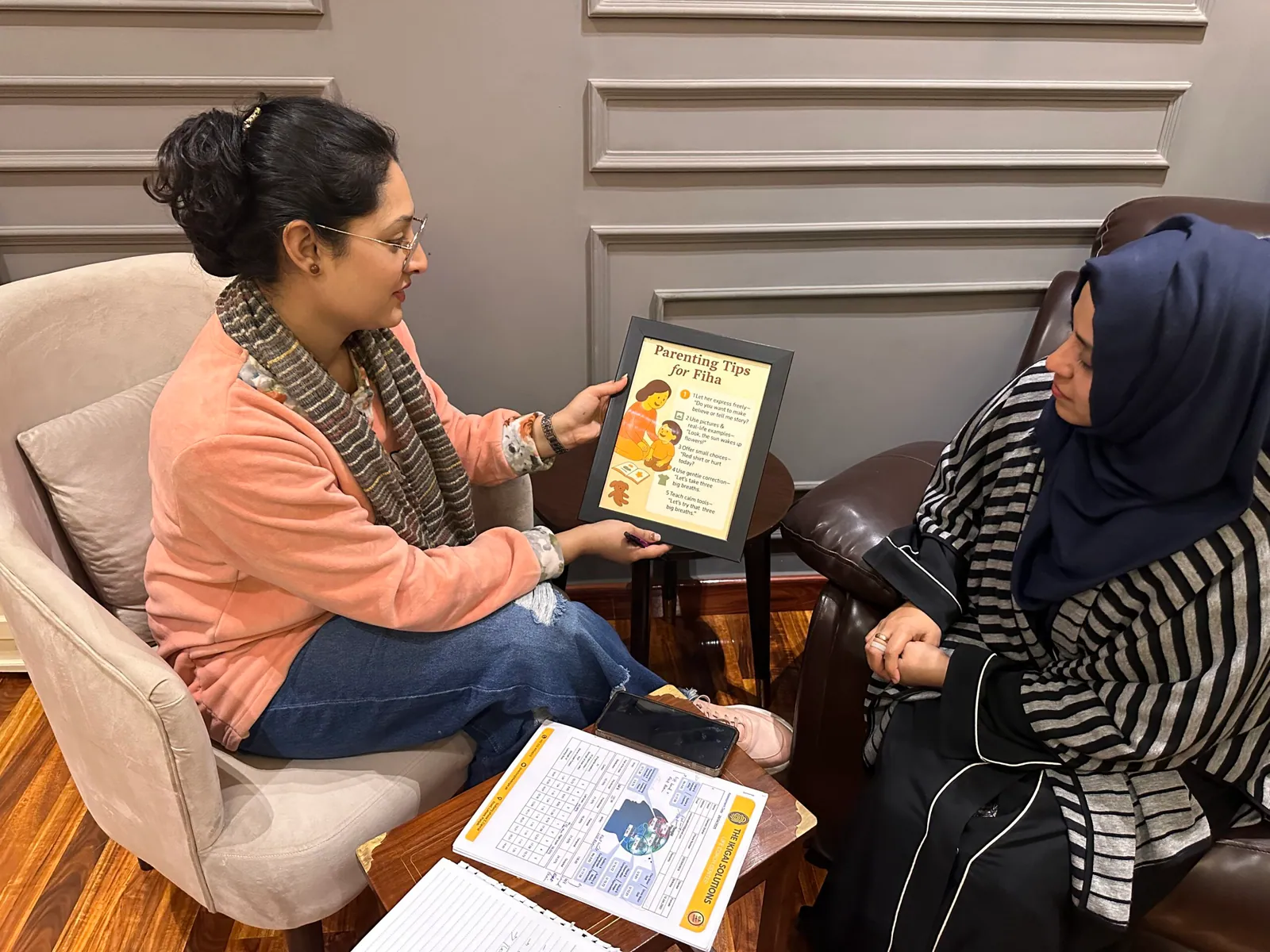
We start by learning how each child thinks, through a playful child assessment and, if parents wish, the Brain Mapping Test. Small classes, with one teacher for every six children, give every child room to speak and try. Parents who want guidance for home can book a child development and behavior session.
When to Ask for Extra Support
If low confidence is affecting your child's daily life, such as refusing to join any group, speak with your pediatrician or a child specialist. Early support makes a real difference, and asking for it is a sign of care, not failure. Good early childhood education treats confidence as part of every child's development.